Bialtec continues to advance applied research on microbiota, digestive efficiency and precision nutrition in animal production. A recent study evaluated the impact of microencapsulated probiotic consortia on lactose utilization, gut microbiota and productive performance in piglets during one of the most critical stages of swine production: the post-weaning period.
Weaning represents a highly demanding transition for piglets. In a short period of time, animals move from a milk-based diet to solid feed, while also facing environmental, social and physiological changes that challenge intestinal stability.
One of the key digestive challenges during this stage is the natural decline in intestinal lactase activity, the enzyme responsible for breaking down lactose. When this capacity decreases, undigested lactose may reach the colon and contribute to digestive imbalance, osmotic diarrhea, dehydration and lower nutrient utilization.
In this context, the study explored the role of microencapsulated probiotics as a nutritional tool to support gut adaptation and promote microbial pathways associated with lactose and galactose metabolism.
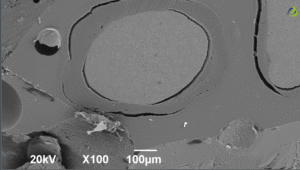
Microencapsulation helps protect probiotic microorganisms during feed processing, storage and gastrointestinal transit, supporting their viability until they reach the intestine.
Why is lactose a challenge after weaning?
Piglets are born with a high capacity to digest lactose from sow’s milk. However, around weaning, lactase activity decreases significantly.
At the same time, post-weaning diets may include milk-derived ingredients or lactose sources to stimulate feed intake and provide energy. The challenge appears when the immature intestine is not able to digest lactose efficiently. In that case, lactose can become a factor associated with intestinal imbalance.
This is why modern swine nutrition must go beyond nutrient formulation. Today, it is also essential to understand how the gut microbiota contributes to transforming nutrients into available energy for the animal.
A study focused on microbiota, lactose and performance
The research evaluated 108 piglets weaned at 21 days of age, fed lactose-rich solid diets during the post-weaning period.
Four nutritional strategies were compared:
Fortcell Feed® Cría, a microencapsulated probiotic consortium containing Saccharomyces cerevisiae, Lactobacillus spp., Bacillus subtilis and Enterococcus faecium.
Fortcell Feed® Lactantes, a microencapsulated probiotic consortium containing Saccharomyces cerevisiae, Bacillus subtilis and Enterococcus faecium.
A conventional treatment with antibiotics.
A control treatment with copper sulfate at nutritional level.
In addition to productive performance indicators, the study included 16S rRNA microbiota analysis and functional metagenomics, making it possible to observe not only which microorganisms were present, but also which metabolic pathways could be involved in lactose and galactose utilization.
Gut microbiota: supporting stability during a critical stage
The results showed that microencapsulated probiotic supplementation was associated with a microbiota profile oriented toward bacterial groups involved in carbohydrate fermentation and adaptation to solid diets.
Genera such as Prevotella and Lactobacillus were identified as relevant in the post-weaning transition. These microorganisms are associated with nutrient fermentation and intestinal balance.
The study also reported a marked reduction of Escherichia in the probiotic and copper groups, while the antibiotic group maintained a considerable presence of this genus.
These findings suggest that microencapsulated probiotic consortia may contribute to a more stable intestinal transition, without causing a major disruption of the core microbial balance.
Beyond bacterial presence: functional capacity
One of the most relevant aspects of the study was the analysis of metabolic pathways associated with lactose utilization.
The research evaluated pathways such as:
The Leloir pathway, related to galactose metabolism.
The tagatose-6-phosphate pathway, used by lactic acid bacteria to transform lactose and galactose into energetic intermediates.
Glycolytic pathways, key for converting sugars into usable energy.
The probiotic groups, especially Fortcell Feed® Lactantes, showed a functional profile oriented toward active lactose transport and intracellular catabolism. In other words, the microbiota appeared to follow a more specialized strategy to transform carbohydrates into energy.
In this treatment, the study reported the highest activation of Glycolysis IV, with values above 200,000 CPM, indicating a high potential for microbial energy harvest.
Fortcell Feed® Lactantes: signals of metabolic efficiency
At the productive level, the study did not find significant differences in final body weight, average daily gain or feed conversion ratio among treatments.
However, there was an important difference in feed intake. Piglets supplemented with Fortcell Feed® Lactantes showed lower feed intake while maintaining comparable weight gain to the other groups.
In practical terms, this result suggests a trend toward improved metabolic efficiency: achieving similar performance with lower feed consumption.
Although this trend should be confirmed in larger-scale studies, it represents a relevant finding for swine nutrition, especially in a context where feed efficiency, gut health and reduced reliance on antibiotics are priorities for the industry.
Microencapsulation: technology serving animal nutrition
The effectiveness of a probiotic does not depend only on the strains it contains. It also depends on its capacity to survive feed processing, storage and passage through the gastrointestinal tract.
Microencapsulation acts as a protective barrier that helps preserve microorganism viability and supports their release in the intestine.
Through this technology, Bialtec continues to develop nutritional solutions that are more stable, functional and aligned with the current challenges of animal production.
A promising alternative to antibiotic-based strategies
The study also compared microencapsulated probiotics with a conventional antibiotic treatment.
Functional results showed that the antibiotic group presented lower representation of some pathways related to lactose and galactose metabolism, including reductions in glycolytic pathways and key enzymes involved in carbohydrate utilization.
This finding highlights the importance of exploring nutritional alternatives that not only support intestinal health, but also help maintain the digestive functionality and microbial balance of the animal.